English| EUR
Suggested for you
More currencies
Choose a language
Pedra da Gávea rises 842 meters above Rio's coastline, making it one of the world's tallest coastal monoliths. The trail includes exposed scrambles, vertical iron ladders, and a final traverse requiring both hands. This guide walks you through the route, the climbing sections, and the preparation that makes the difference between a safe summit and a dangerous retreat.
Quick answer
The Pedra da Gávea hike is a 5-kilometer round-trip trail that takes 4 to 6 hours, depending on fitness and weather. The route begins at the Estrada Sorimã trailhead in Barra da Tijuca and ascends through Atlantic rainforest before reaching the Carrasqueira, a steep exposed slab requiring scrambling, followed by vertical iron ladder sections and a narrow traverse to the summit plateau. A guide is strongly recommended for first-time climbers due to route-finding challenges and the technical nature of the upper sections.
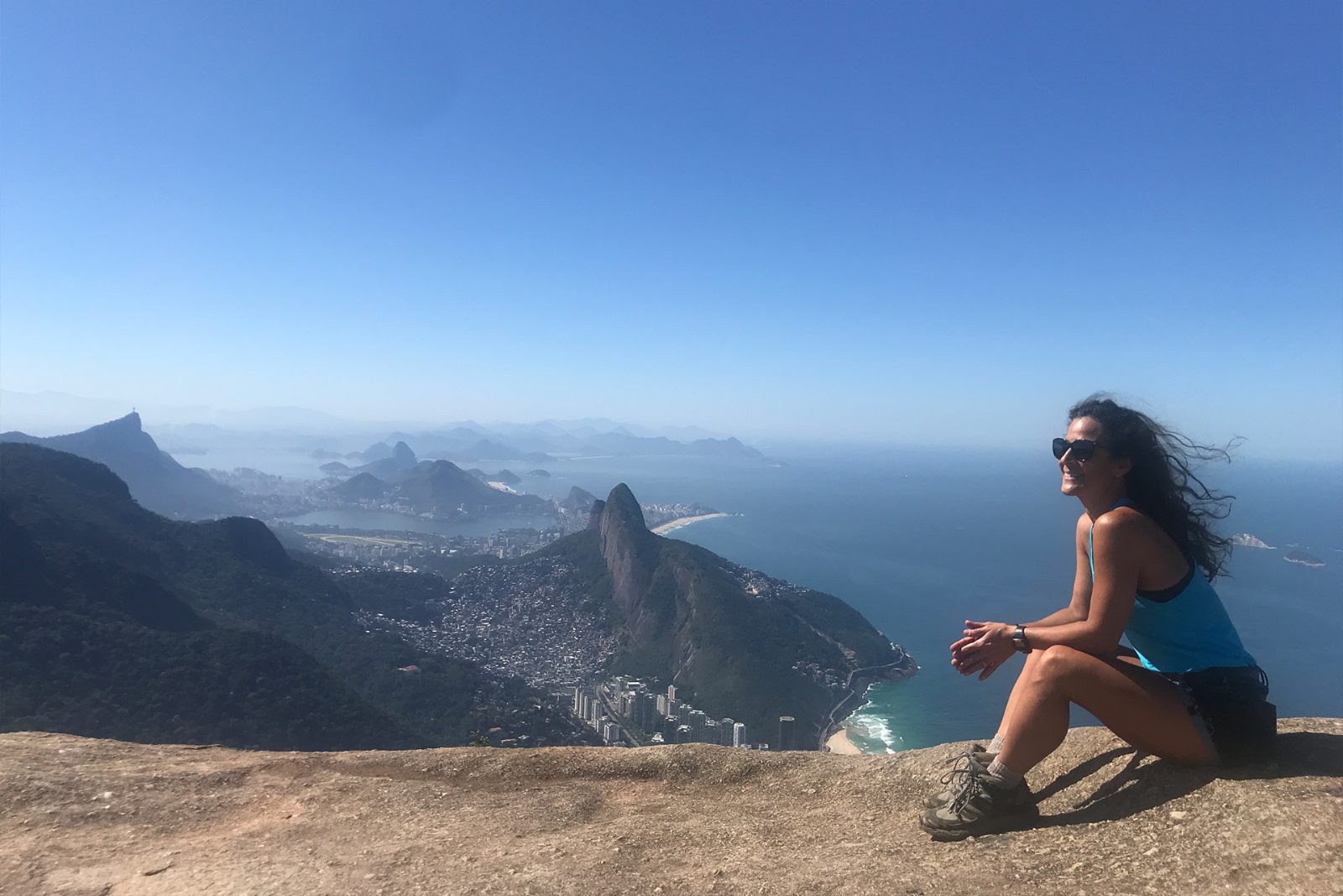
Pedra da Gávea's summit plateau sits 842 meters above sea level, but the elevation gain from the trailhead is approximately 800 meters compressed into less than three kilometers of ascent. The trail begins as a wide forest path marked by red arrows painted on trees and rocks, climbing steadily through dense Atlantic rainforest with minimal shade once the canopy opens. Within the first hour, the trail steepens noticeably, and the terrain shifts from packed dirt to exposed tree roots and granite slabs. The Carrasqueira section is where most hikers pause. This 30-meter granite slab is inclined at roughly 50 degrees and offers limited natural handholds, so climbers rely on friction and balance rather than gripping edges. Rain or morning dew makes the rock dangerously slippery, and this is the section where most accidents occur. Above the Carrasqueira, the trail threads through a narrow vertical chimney with fixed iron ladders bolted into the rock face. The final traverse to the summit plateau requires crossing a ledge barely one meter wide with vertical drops on both sides, and while safety cables are anchored along the route, a fear of heights becomes a tangible obstacle here. A pedra da gavea hike guide or experienced companion is critical for first-time climbers because the trail is poorly marked beyond the forest section, and several false paths branch off near the base of the Carrasqueira. Local guides also carry rope for additional security on the traverse and can assess weather windows, since fog and wind gusts at the summit can close visibility and make descent hazardous. The trailhead is located at Estrada Sorimã in Barra da Tijuca, accessible by car or rideshare, with informal parking along the roadside. No official permit or conservation fee is required, and the trail is open daily from 08:00 to 17:00, though most climbers begin between 08:00 and 09:00 to avoid midday heat and ensure they descend before late afternoon when the rock becomes shadowed and harder to navigate. Physical fitness matters more than technical climbing experience. The ascent demands sustained leg strength, balance on uneven surfaces, and comfort with exposure, but no specialized climbing equipment is required beyond sturdy footwear with aggressive tread. Hikers should carry at least two liters of water per person, snacks for energy, and a headlamp in case descent runs longer than planned. The summit offers 360-degree views across Barra da Tijuca, Tijuca Forest, and the Atlantic coastline, with the Cristo Redentor and Sugarloaf Mountain visible on clear days.
“The Carrasqueira is where the hike becomes a climb, and where friction and nerve replace stamina as the determining factor.”
The best arrival window for your hike is 08:00–09:00 to avoid heat and afternoon congestion on technical climbing sections. Starting early ensures you navigate the challenging segments before they become bottlenecks.
Dry and mild 20°C–25°C. Lower humidity makes for more comfortable climbing conditions.
Hot and humid 30°C–35°C. Afternoon thunderstorms are frequent and often impact safety.
—
Best for those seeking to avoid weekend crowds at the Carrasqueira rock scramble.
—
Expect significant delays at technical sections due to higher foot traffic.
Verdict: Tuesday to Thursday, arriving between 08:00–09:00, during the cooler months of May to September.
Pedra da Gávea is open to visitors daily throughout the week. The trail maintains consistent operating hours to facilitate access for hikers.
Access to the Pedra da Gávea trail is located within the Tijuca National Park. There are no entrance fees or permit costs required for hikers.
Verdict: The typical cost for any visitor is 0 BRL, as there are no official entrance fees for this hike.
The trailhead for Pedra da Gávea is located at Estrada Sorimã, Barra da Tijuca, Rio de Janeiro - RJ, Brazil. The most reliable approach for visitors is via taxi or ride-hailing app, as there is no direct public transit drop-off at the trailhead entrance.
Direct to Estrada Sorimã trailhead
BRT TransOeste or local lines to Barra da Tijuca
Drive to Estrada Sorimã
Instruct your driver to take you specifically to the entrance of the Sorimã trail at Estrada Sorimã. Limited street parking is available, so private transport is recommended to ensure you reach the starting point efficiently.
The technical scramble and exposed summit require proper gear and physical readiness.
Everything you need to know about pedra da gavea hike guide
While there is no legal requirement for a guide, this pedra da gavea hike guide recommends hiring one for safety, especially if you are inexperienced with technical scrambling. Professional guides provide essential knowledge of the terrain and navigation.
The entry fee is 0 BRL as it is a public conservation area. No official permit or conservation fee is required for individuals entering the park.
To avoid excessive heat and heavy afternoon crowds on technical sections, our pedra da gavea hike guide suggests arriving between 08:00 and 09:00. Starting early also helps ensure you return before the park closes.
The area is open daily from 08:00 to 17:00. Please plan your return trip to ensure you are off the mountain by the time the gates close.
This is a strenuous mountain trek involving steep inclines and rock climbing, so this pedra da gavea hike guide does not consider it appropriate for young children. Even for teenagers, significant hiking experience and physical fitness are necessary.
The route is known for its intense elevation gain and exposed segments that require navigating granite surfaces. Using a comprehensive pedra da gavea hike guide can help you prepare for the physical demands of this Rio de Janeiro landmark.